
Welcome to our Families History in Weaving
For Jonathan and Marlene, weaving is not merely a craft.
It is something far deeper.
Their families are bound to wool not by fashion or nostalgia, but by lived history. Generations before them worked in the woollen mills of Wales, at the loom and by the dye vats, spinning, weaving, washing and finishing cloth that was made to endure.
On Marlene’s side, her great-aunt Martha Price worked at Penwern Woollen Mill in Cribyn alongside her husband and father-in-law. It was a small, honest mill, sustained by people rather than machines. Even in its final years, they carried on with dignity and grit, holding to a way of life that was already slipping away.
On Jonathan’s side, the connection runs through the villages of West Wales and beyond. Generations of his family worked within the woollen tradition around Pencader, Carmarthenshire, part of a culture where cloth was not simply bought, but understood. Every blanket carried a story. Every household had one that mattered.
This is not distant history. This is personal. This is our heritage.
It’s our ancestry. It’s part of who we are. It’s in our blood. It runs through our veins.
We grew up knowing the feel of real wool, the smell of lanolin, the weight of a blanket that had been passed down, not just bought. These blankets weren’t just useful. They were loved. They were kept safe. They wrapped new babies and warmed old bodies. They were the quiet heart of Welsh homes.
That’s why we continue.
We don’t work with Welsh blankets because it’s fashionable or nostalgic.
We do it because to let it go would be to lose something sacred.
This tradition lives in us. It pulses with memory and pride.
It is not just what we do — it is who we are.
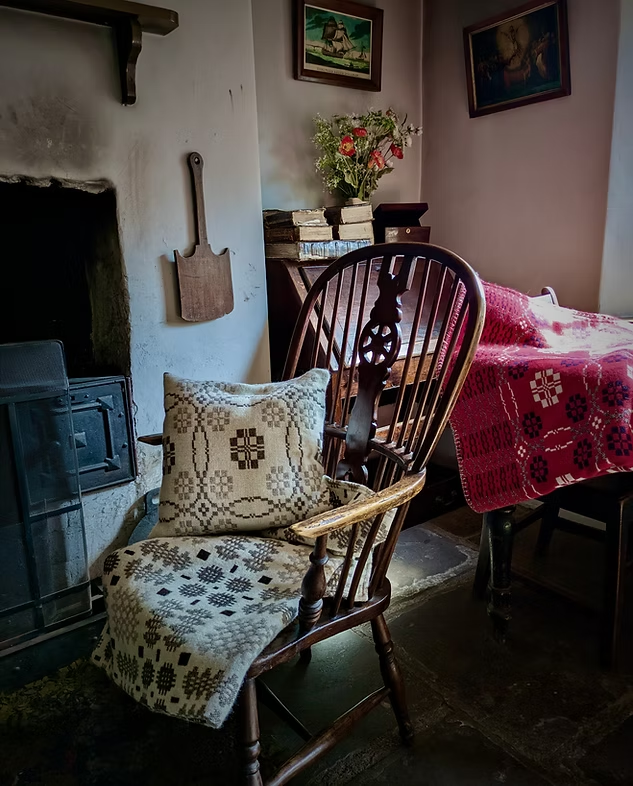
David Humphreys and the Blackinton Mill
Born in 1846 in Pencader, Carmarthenshire, David Humphreys (Jonathan’s Great-Great Grandfather) grew up in a Wales shaped by wool. The rhythm of the loom, the scent of lanolin, and the long, patient labour of spinning and weaving were part of everyday life. Like generations before him, he learned his craft young, working in the small woollen mills of West Wales where skill, judgement and endurance mattered more than speed.
Across the Atlantic, a parallel story was unfolding.
In March 1822, Sanford Blackinton and his partners established a small woollen mill in what would become Blackinton, Massachusetts. At first, it was modest: a two-storey factory fitted with second-hand machinery, producing cloth slowly on hand looms. Yet it grew rapidly. Powered looms were introduced, the factory expanded, and a village formed around the mill, complete with homes, shops, a school, church and library. By the mid-nineteenth century, S. Blackinton & Co. had become the largest woollen manufacturer in western Massachusetts.
As the industry expanded, Blackinton looked outward, specifically to Wales.
During the 1860s and 1870s, Welsh workers were actively recruited for their expertise in wool. Families crossed the Atlantic, bringing with them generations of accumulated knowledge: how to judge fibre, how to balance tension on a loom, how to finish cloth properly. The mills of Blackinton became, in part, an extension of the Welsh woollen tradition, transplanted into an American industrial setting.
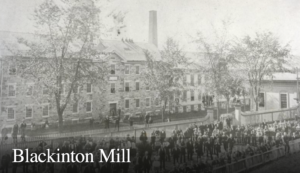
It was into this world that David Humphreys arrived.
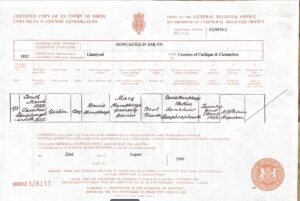
In 1891, David and his wife Mary Maria left Wales together and crossed the ocean to North Adams, Massachusetts. They were not young emigrants chasing novelty, but a married couple of resolve, prepared to begin again far from home. David joined the established Welsh community working within the North Adams and Blackinton woollen industry. The buildings were larger, the machines louder, the pace more demanding — but the fundamentals were unchanged. Wool still passed through his hands. Skill still mattered.
The workforce around him was largely Welsh. Housing was provided close to the mills, and families lived, worked and endured together. Men dominated the workforce numerically, while women and children carried out much of the work in carding, spinning and weaving, a common reality of the period. It was also an era of tension and change, marked by protests and strikes as workers sought fairer hours and conditions.
By the end of the nineteenth century, Blackinton was producing high-grade cashmeres and worsteds. In 1901, the Blackinton Company went out of business, though the mill complex itself continued under successive owners before finally closing in 1950.
David Humphreys had lived and worked in two worlds. Though separated by an ocean, they were bound by the same material, the same skills, and the same quiet pride in work done properly. The loom that shaped his youth in Pencader sustained him again in Massachusetts.
Mary Maria died in 1918.
David followed her in 1924.
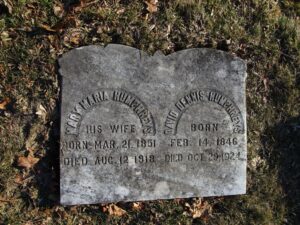
They now rest together in North Adams beneath a simple shared stone.
Am Byth Ynghyd — Forever Together.
The thread was never broken.
It simply travelled.
The Story of Penwern Woollen Mill, Cribyn
A quiet corner of Welsh history, bound in wool and memory.
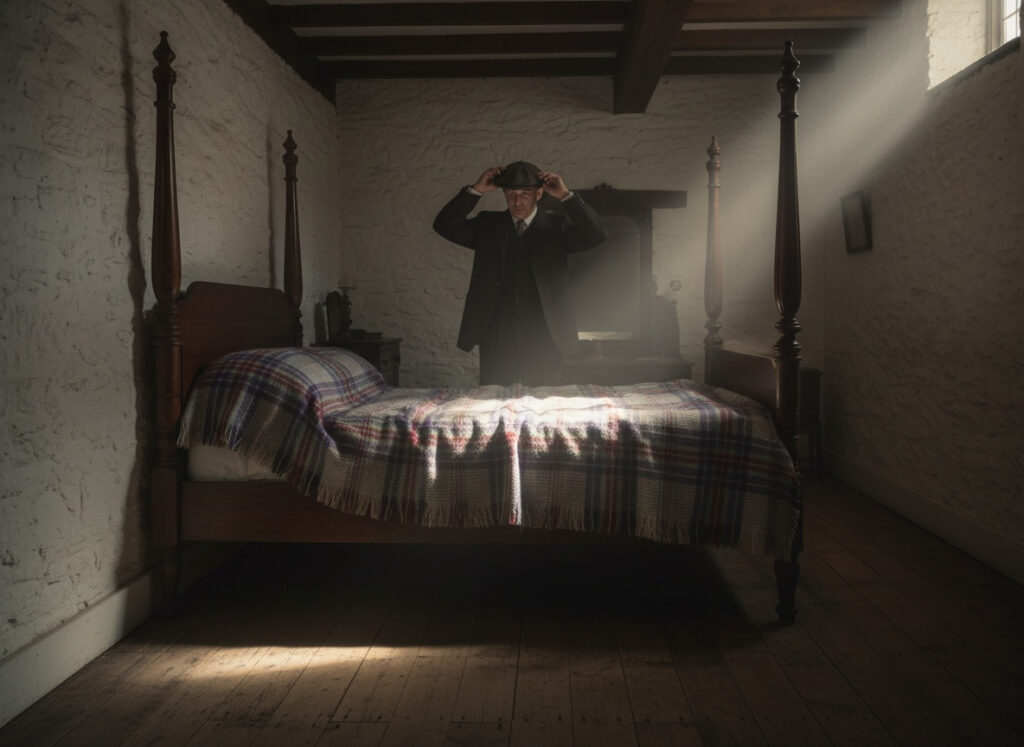
Tucked away in the gentle hills near Cribyn, Ceredigion, stood Penwern Woollen Mill. Though now long silent, its stones once echoed with the rhythm of looms and the voices of family, hard at work. Among them were John and Martha Price, the last keepers of a centuries old craft, and kin to Marlene’s family line.
Martha Price, aunt to our Grandfather, worked alongside her husband John, the 1901 census shows they were married, and his father David to keep the mill alive during its final, difficult years. By the late 1940s, Penwern was described as being in fair condition, with two lean to sheds and machinery for dyeing and finishing wool. The working environment was cramped and untidy, a reflection not of neglect, but of the unrelenting effort it took for a small, family run operation to survive in an era of industrial change.
At the helm was David Price, a very elderly man by then, helped by his 52 year old son John and Martha. Together, they carried forward a way of life that had shaped the fabric of Welsh rural industry for generations. The mill produced woven woollen cloth, likely dyed and finished on site, destined for markets near and far.
But time was catching up. David Price passed away in 1950, and with his death, something intangible left the building too. The estate was left to John Price, his son and woollen manufacturer, but the momentum could not be sustained. Just two years later, in 1952, the mill closed its doors for the last time, quietly fading into dereliction.
Today, the site is a ghost of its industrious past. Stones weathered by wind and time remain, perhaps echoing with the memory of looms, laughter, and a family’s tireless dedication. But through stories like this, and the threads of family that bind us, the legacy of Penwern lives on.
This is more than just a record of a lost mill, it is a tribute to the quiet resilience of people like Martha and David Price, who worked not for glory, but to preserve a livelihood, a tradition, and a sense of place. Their spirit continues to inspire what we do today.
Today the mill has been renovated into living accomondation.
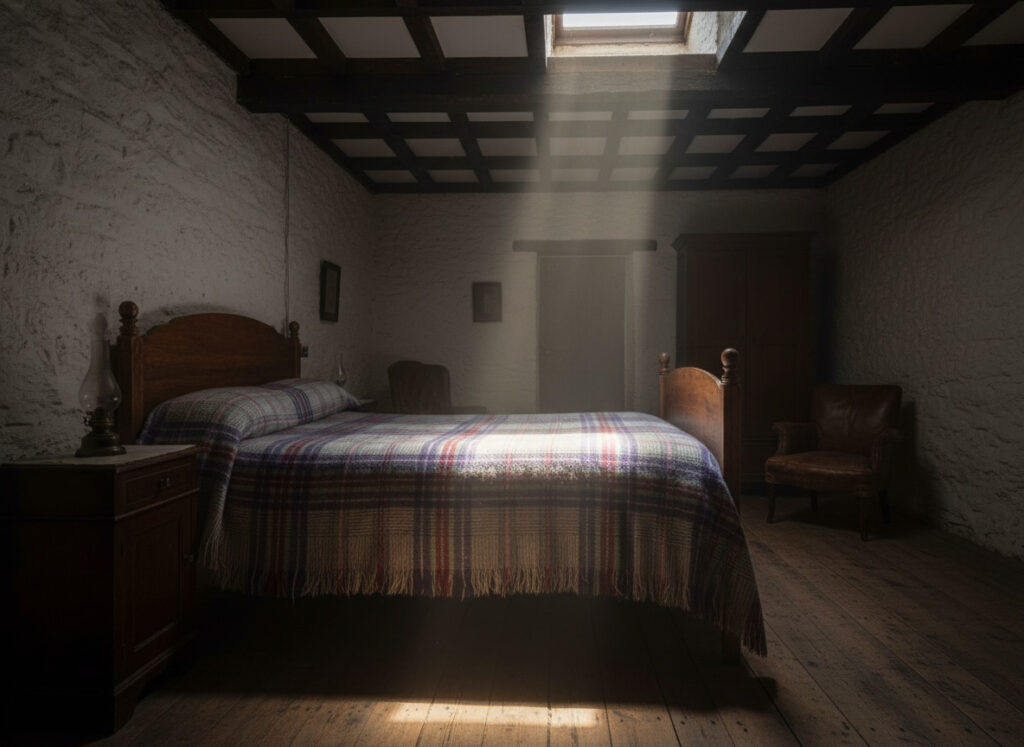
A blanket woven at Penwern, Cribyn.
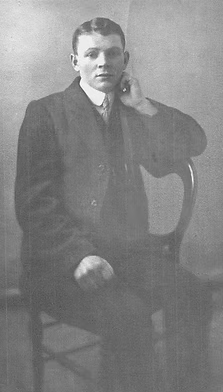
John Price of Penwern Mill
The Story of Our Craft
Dinefwr Blankets is a young business, but our roots are old.
Today, we design our blankets here in Wales, finish them in our workshop in Llandeilo, and work with skilled artisan weavers in the UK who share our respect for traditional methods, natural materials and proper workmanship.
Our long-term aim is to weave ourselves. We have already purchased four vintage Dobcross looms and care for them with the hope that, in time, they will once again weave cloth here in Wales, as they were built to do, just as our own ancestors once worked at the loom.
Until that day comes, we choose to work with craftspeople whose hands and experience we trust, people who understand that quality takes time and that good cloth should last.
One day, we hope our own looms will be working again. Until then, every blanket we offer is made with care and respect for the traditions we value.
Echoes of Wales in every weave.